
Warrensburg City Council discusses rules for municipal property usage
Published 5:03 am Wednesday, October 28, 2026
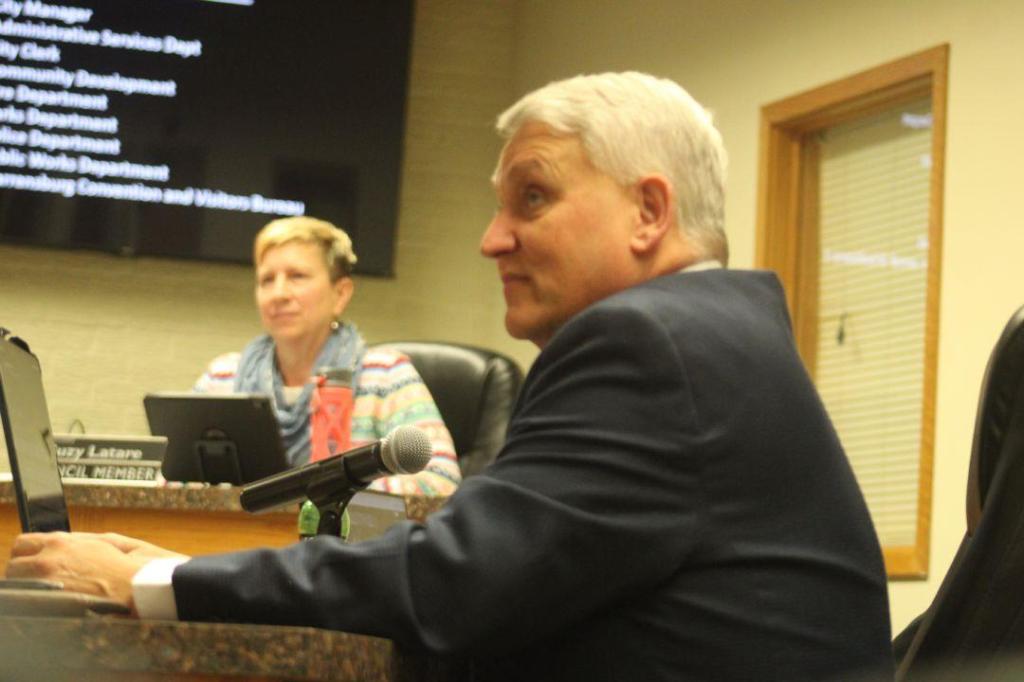
WARRENSBURG — The Warrensburg City Council discussed a proposed ordinance to establish a policy for official uses of municipal facilities during its Monday, Oct. 26, meeting.
The topic, which would create Chapter 29 of the city’s Code of Ordinances, centers around building a consistent process for requests to place banners, flags, artwork, commemorative lighting, monuments, or other symbolic displays on municipal property.
The ordinance also includes language that would allow for the use of municipal property for private use such as seating, dining, landscaping and similar improvements.
City Manager Mike Schrage said the proposed ordinance is all about getting policy to match up with current city practices. The policy centers around time, place and manner.
“The concept is trying to maintain sufficient control over city facilities to allow these types of uses without having that interpreted as a free speech forum that is open for all,” Schrage said. “The ordinance is formatted so things such as banners on light poles, whether it’s beautification on the sidewalk, are endorsed as municipal activities, municipal messages consistent with municipal purposes – keeping it as narrowly defined as possible rather than opening it up to all sorts of messages or purposes that may be broader beyond the municipal purpose.”
The ordinance defines municipal purpose as an objective to promote or support public health, safety, welfare, economic vitality, tourism, historic preservation, cultural enrichment, recreation, education, education, civic identity, beautification or any other objective determined by the council to benefit the community.
City attorney Adam Sommer provided clarification on the definition.
“If it’s not something that the city is behind, in terms of a policy or that is benefiting the city as a whole – the Farmers’ Market is a perfect example of something that has an obvious economic impact, a social impact, it’s an apolitical event,” Sommer said. “Nothing about it shows anything other than positives for the city. A municipal purpose is certainly to cultivate small businesses, vendors, farmers and such.”
Under the ordinance, those interested in using city property for display purposes would submit a request to the city, which would then bring the usage to the city council.
Depending on the situation, the council would be given either an ordinance or resolution for discussion. If approved, the city would give the applicant a license for said purpose.
“Stuff like the garland, the Old Drum sign, the Farmers’ Market, the stuff that we know is going to come every year, it’s going to stay up for a long time, it’s kind of on its own natural cycle – an ordinance that says we anticipate these occur every year and we’re OK with that so we don’t have to bring it back every single time,” Sommer said. “But let’s say a one-off festival that somebody’s going to throw, that would be where we go through the process and bring it forward. Essentially, unless it’s extremely complicated, which most of these shouldn’t be too complicated, it shouldn’t take that long to get the agreement in place, bring it to council — that shouldn’t take more than a month to go through the entire process unless it’s an incredibly complicated display they want to put on at multiple locations.”
Each license would create an agreement between the city and applicant the chance to use municipal property, stating permission has been given for an approved purpose. If used for something beyond the scope, the city would have the right to revoke the agreement.
“Basically, it says if they violate the terms, the city could say ‘take your stuff down; if you don’t, we’re going to take it down and send you the invoice,” Sommer said. “We’re making it so it’s both useful for the organization, but provides the city with the backend ability to say you violated this, we are no longer allowing this and allow us to terminate and remedy the situation without having to wait six months or whatever to get a court order or something like that.”
Schrage added he does not plan for the city to go heavy-handed into the enforcement process.
“We may find as people do what they’ve historically done – we’re catching them in the process saying ‘you may not know, but here’s what we need to do going forward,’” Schrage said. “I don’t have the intention of being heavy-handed and shutting things down that have been going on forever, but just try to catch things up to this process.”
Both Schrage and Sommer noted the agreements for the usage of city property would likely vary in specifications by scenario.
“We’re probably not going to want to see their insurance for Garland necessary, but for an alleyway situation, tables and chairs, food service, things like that, we’re going to want to make sure everything is covered correctly,” Sommer said. “That’s why this became one ordinance. Then that licensing agreement allows us to go in on the backend and customize it to the setting that we’re given.”
Given the weight of creating a new city codes chapter, council member Max Ridenhour suggested the council hold off on making a final decision until the next council meeting.
The council unanimously agreed.
Audit services approved
The council unanimously approved an ordinance allowing KMP CPAs, LLC, to conduct the city’s Fiscal Year 2026 Audit.
KPM CPAs has served as the City’s auditors since 2012.
Children’s Memorial Service Fund
The Council unanimously approved an ordinance broadening the permissible uses of the Children’s Memorial Fund and clarifying the role of the City Council and the Children’s Memorial Gardens Advisory Board.
The Advisory Board makes recommendations to the City Council for fund usage.
Depot Renovation annual services
Mayor Pro Tem Jan Jones, council member Suzy Latare and council member Eddie Osborne approved an ordinance allowing the City to enter a contract with Depot Renovation for Fiscal Year 2027 Services.
Mayor Bruce Uhler and Ridenhour recused themselves from the vote.
Contracts for the Warrensburg Convention and Visitor Bureau, Johnson County Economic Development, OATS Transit, Warrensburg Main Street, the Warrensburg Chamber of Commerce, the Pioneer Trails Regional Planning Commission, the Whiteman Area Leadership Council, the Whiteman Area Community Council and Big Brothers Big Sisters of Johnson County were approved at the Oct. 12 meeting.
Depot Renovation had been set for approval that day, but had to be taken out due to a conflict of interest with Ridenhour being a member of the organization’s board.
Proclamation
Uhler issued a proclamation declaring Saturday, Oct. 31, as Eustace Cockrell Storytelling Day.
The proclamation corresponds with the 90-minute storytelling tour slated for 10 a.m.
The tour will begin in front of the site where the Cockrell family home once stood – now Brightspeed at 206 E. Market Street.
Event participants will be able to travel on foot or via vehicle. Attendees can RSVP with their name and group size to eustacecockrell@gmail.com by Friday, Oct. 30.
Other updates
Fire Chief Ken Jennings provided the council with updates on two new fire engines.
WFD members traveled to inspect the trucks in Brandon, South Dakota, between Oct. 19 and Oct. 21. Less than 20 needed corrections for the trucks were identified, including paint blemishes, wire pinch points, light programming correction and the addition of an edge protector to protect the paint below a storage compartment.
The trucks are expected to arrive in Warrensburg by the end of November.
Police Chief Andy Munsterman informed the council that the city’s on-order BearCat is expected to be in the city’s hands in February 2028.
Parks Director Chris Deal reported Lions Lake was stocked with bluegill and catfish last week. Largemouth bass will be added in Spring 2027.
Joe Andrews can be reached at 660-747-8123.